
A podcast where we share stories of hope for family caregivers breaking through loneliness to see God even in this season of life.

Stories of Hope for living content, loving well, and caring with no regrets!
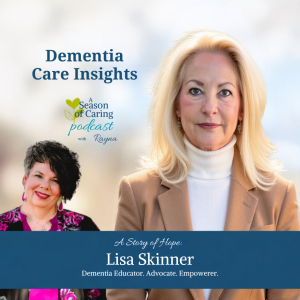
Episode 254
Dementia can turn everyday life into constant guesswork and the hardest part is when your loved one can’t tell you what they need. We sit down with Lisa Skinner, a behavioral specialist and Certified Dementia Practitioner, to talk about what actually helps in Alzheimer’s caregiving when communication fades, emotions run high, and the days start feeling like a nonstop reaction cycle.
We dig into one of the biggest caregiver pain points: behaviors that look “difficult” but are often meaningful signals. Lisa shares how patterns and triggers show up over time, why “I want to go home” is usually about safety and familiarity rather than a street address, and how validation plus the right questions can lower conflict fast. We also talk practical dementia care at home, including simple environment tweaks that prevent repeated spirals and reduce stress for everyone involved.
Then we get into purpose and meaning, not as a nice extra, but as a basic human need that remains even in later-stage dementia. Lisa tells a striking person-centered care story where meeting a nurturing need changed everything, and we connect that to what family caregivers can try at home. Along the way, we talk honestly about caregiver stress and why regular self-checks are essential if we want to care without regret.
If you want more reliable dementia resources, Lisa points listeners to her show and her resource library at mindingdementia.com. Subscribe, share this with a caregiver friend, and leave a review so more families can find real help when Alzheimer’s enters the picture.
_________________________________________________________________________________
Resources
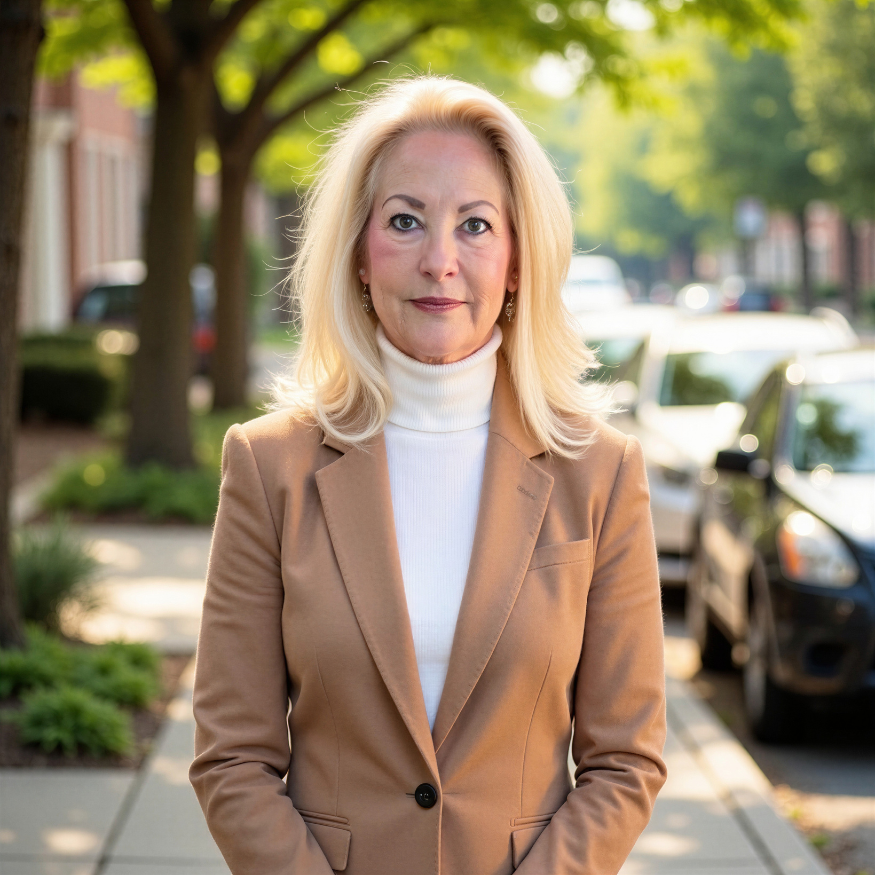
Lisa Skinner
International 4X Best Selling Author Lisa Skinner is a behavioral specialist with expertise in Alzheimer’s disease and related dementia. In her 30+year career working with family members and caregivers, Lisa has taught them how to successfully navigate the many challenges that accompany this heartbreaking disease.
Lisa is a Certified Dementia Practitioner, a Certified Dementia Care Trainer through the Alzheimer’s Association, and a Certified Dementia Care Program Director, as well as the internationally recognized podcast host of the Truth, Lies, & Alzheimer’s Show.
Lisa is also an internationally recognized TEDx speaker and has appeared on many international, national and regional media broadcasts, including a feature in Forbes Celebrity Magazine and on the NASDAQ Times Square Bulletin Display, and she also holds a degree in Human Behavior and is a recipient of an Honorary Doctorate (Honoris Causa) in Dementia Care and Cognitive Health Leadership in recognition of “her exceptional contributions to society and community with significant national and international impact.”
Transcript
*Transcript is an actual recount of the live conversation
Welcome And Guest Introduction
Rayna Neises 0:04
Hi, I'm Rayna Neises, your host of A Season of Caring podcast, where we share stories of hope for family caregivers, pushing past the busyness and loneliness of caregiving to see God even in this season. Thank you for joining us today for stories of hope. with Lisa. I'm excited to introduce you to our guest, Lisa Skinner. Lisa is an international four-time bestselling author and is a behavioral specialist with an expertise in Alzheimer's disease and related dementias. In her 30-plus year career working with family members and caregivers, Lisa has taught them how to successfully navigate the many challenges that accompany this heartbreaking disease. Lisa is a Certified Dementia Practitioner, a Certified Dementia Care Trainer through the Alzheimer's Association, and a Certified Dementia Care Program Director, as well as the internationally recognized podcast host of- The Truth, Lies, and Alzheimer's Show. Lisa is also an internationally recognized TEDx speaker and has appeared on many international, national, and regional media broadcasts, including a feature in Forbes Celebrity Magazine and on the Nasdaq Times Square bulletin display. She also holds a degree in human behavior and is a recipient of an Honorary Doctorate in Dementia Care and Cognitive Health Leadership in the recognition of her exceptional contributions to society and community with significant national and international impact. Welcome, Lisa. It's so great to have you here today
Lisa Skinner 1:33
Thank you, Rayna. It's such a pleasure to be here
Rayna Neises 1:37
So start off by just sharing with my listeners a little bit about what caregiving has looked like in your life
Lisa’s Caregiving Story Across Two Worlds
Lisa Skinner 1:45
Oh my gosh. I have, watched caregiving from so many different lenses, including my own personal experience. as you mentioned, in your introduction, I have been doing this professionally for a little over 30 years now. But my experience actually dates back 50 years with my grandmother, she actually turned out to be the first of eight of my own family members lived with one of the brain diseases that causes dementia. I have experienced it and watched it from a very personal level as well as a professional level, and working in buildings where I have, seen it on a day-to-day basis and worked with the... i've trained caregivers. But, I, my husband and I actually helped take care of his mother, who was diagnosed with Alzheimer's disease. His sister was the primary caregiver, but the rest of his siblings, took turns on the weekends to give her a respite and we, actually had her for, two days in a row, and then a different sibling took 'em so we rotated that.
Rayna Neises 3:07
Hmm.
Lisa Skinner 3:08
I took care of my own mother for three and a half years. She didn't have dementia. she had had several massive strokes and was pretty much bedbound, but still sharp as a tack. But the thing that made that caregiving journey more difficult was kind of a unique situation because the last stroke that she had, caused her to aspirate. In other words, what she ingested went directly into her lungs instead of into her stomach, so they had to implant what they call a PEG tube. So you had to feed her through this tube, formula. My husband, my daughter, we had a caregiver. But she lived with us and I was like the backup caregiver. I was the one that showered her, and we all fed her. It was definitely a challenge. So just like dementia caregiving is an unbelievable challenge because of cognitive decline, my mother was a challenge because she was immobile and had to be fed through a feeding tube
Rayna Neises 4:16
Yeah. And I know I've talked to many nurses and people in professional fields. There's such a difference in caring for your own family versus in that professional setting. And I often hear caregivers almost feel bad because they aren't handling it very well because it is so different Whatever caregiving looks like is challenging when we're taking care of our loved ones, for sure
Lisa Skinner 4:42
I always say, especially with dementia because of the cognitive decline, and it's progressive. You know, it starts off, in the mild stage and then it progresses to a 24-hour-a-day, seven-day-a-week, situation where you have to help with every single activity of daily living. Plus, at that point in time, they really have lost their ability to even communicate with us and let us know what's bothering them or what their wants
Reading Behavior As Communication
Lisa Skinner 5:10
or needs are. So then you kind of have to put your Sherlock Holmes hat on and
Rayna Neises 5:14
For sure.
Lisa Skinner 5:15
it out,
Rayna Neises 5:16
Yeah
Lisa Skinner 5:17
That adds so much more of a challenge to your everyday, tasks, trying to figure out what's bothering them. And they will communicate it through difficult behaviors, acting out and because they're trying to... We know they're trying to tell us something,
Rayna Neises 5:35
Mm-hmm.
Lisa Skinner 5:35
it's up to us to figure out what that something is, and it's not always obvious, right?
Rayna Neises 5:41
Yeah, for sure. My mom was diagnosed when she was just 53. She was diagnosed with Alzheimer's, and one of the things that impacted first was her verbal communication skills. And she lived 12 years, but the last eight years she talked gibberish. And so at a very young age, I had to do that, had to figure out what did she need, how do we, keep her happy, how do we keep her contented and take care of her needs when she can't even tell you what she needs? So it definitely is challenging
Lisa Skinner 6:11
Out of curiosity, 'cause I've seen this a lot in my career, did you ever notice that patterns started to develop with the way she was acting to what she was trying to tell you? Like this behavior, you finally figured out, oh, this means she's got to go to the bathroom, or this behavior, she's hungry, or something's
Rayna Neises 6:36
Mm-hmm.
Lisa Skinner 6:36
Have... Did you ever notice
Rayna Neises 6:37
Yeah, definitely
Lisa Skinner 6:39
patterns. They establish patterns.
Rayna Neises 6:41
Yeah, and it made it a lot easier when I was taking care of my dad who, seven years after my mom passed away, he was diagnosed with Alzheimer's. He lived 14 years. Then the last four and a half we had him at home, and I was one of the primary caregivers for him. And it was funny because of what I learned with my mom, I quickly learned to look for those patterns with my dad. And one of the things the caregivers had a lot of trouble with with my dad was him wanting to leave. And I kept thinking, w- why did they have trouble with that? I don't, I don't have as much trouble with that. 'Cause once he wanted to leave, I just went. We just left. We would just get in the car and drive around, go get ice cream, whatever. So I didn't really argue with him, so I was like, "I don't, you know, I don't know why you're making this so hard," is what I kept thinking. But one of the things that I noticed was my dad wore a ball cap, and every time he put that hat on he was leaving. And they would leave that on the back of the couch right by the door, and he would see it, put his hat on, and he was going. And so I, I learned, I was like, "Okay, guys, this can't stay here. We need to put it away in the closet so that it doesn't trigger that behavior." But it is funny how much you can find those patterns, and it really does make a huge difference
Lisa Skinner 7:55
huge difference.
Rayna Neises 7:56
for them.
Lisa Skinner 7:57
they're not obvious at first. Sometimes it can take a while,
Rayna Neises 8:01
Mm-hmm.
Lisa Skinner 8:01
from what I have seen in all the decades that I've kind of been in this world, patterns do emerge. So,
Rayna Neises 8:09
Even just pacing
Lisa Skinner 8:11
will figure it out that, know what or she is trying to tell me because this has happened before, and I was, correct in my assumption.
Rayna Neises 8:21
Ja
Lisa Skinner 8:21
then, you know, that there was that correlation each time that behavior emerged. Not 100% of the
Rayna Neises 8:28
Right
Lisa Skinner 8:28
but often enough that you would at least know what to attempt to resolve. And then if that didn't work, then okay, I guess this time it's got to be something else. Did your dad... Because this is very common behavior, what you are described with, with your dad. But a lot of folks living with dementia actually say, "I want to go home." Did your dad ever say, "I want to go home," or just, "We're leaving"?
Rayna Neises 8:59
Yeah, it was occasionally, but again, with me that wasn't what I heard. He didn't say that to me. With caregivers, because we had so many different people, he lived in his home and we all came to him, and so with all those different personalities and different people, he did do that with some of the others, that wanting to go home. But with me, I, I don't remember. Just a r- ran a few times,
Lisa Skinner 9:23
That is not only frustrating for some caregivers, a lot of caregivers, but it's confusing because
Rayna Neises 9:31
They are home
Lisa Skinner 9:32
wanna say, "What are you talking about? You are home."
Rayna Neises 9:35
Yeah
Lisa Skinner 9:35
when they say they wanna go home, really what I learned is they're looking for a place that they feel safe and secure that's familiar. And their short-term memory just kind of malfunctioned at that time, and they're looking around at the surroundings that they've lived in for decades, it's not necessarily familiar to them, because in their mind, they're living in a past time period of their life, and they're looking for a different home.
Rayna Neises 10:06
Yeah.
Lisa Skinner 10:06
they grew up in or, or that, you know, when they first got married, they were a much younger version of themselves. So the home that they're in doesn't necessarily always represent their home to them, and it just depends on whether that short-term memory is functioning at that given time or if they have, you know, time traveled to a different period of their life. They're looking for that home. some people, home represents going home to the Lord.
Rayna Neises 10:42
Yeah
Lisa Skinner 10:42
And so trying to distinguish what it is they meant. But you know what we can do, what we can do if our loved one is insisting on going home,
When Home No Longer Feels Familiar
Lisa Skinner 10:55
I mean, seriously, Rayna, I have seen people packing stuff in suitcases telling their caregivers or their family member, "I gotta go home. I gotta get out of here. I have no idea where I am."
Rayna Neises 11:07
Hmm.
Lisa Skinner 11:09
instinct is to say, do you mean? You are home."
Rayna Neises 11:12
Yeah
Lisa Skinner 11:13
to them, they're not, right? But if we say things like, "It sounds like your home is very important to you and means so much. Tell me more about it." And then you can kind of probe and get them to describe the home they're talking about, so it might give you some clues as to which home they are trying to get to, because that can actually make things a little bit easier, and then you can join them in that reality instead of, trying to figure out what are
Rayna Neises 11:45
Mm-hmm.
Lisa Skinner 11:46
So there's a lot of tools that we have now that we can try to solve the puzzles for ourselves as caregivers.
Rayna Neises 11:53
And that really is a lot of what we're doing is trying to put these puzzle pieces together, and we really don't even have the picture to help us or to guide us doing
Lisa Skinner 12:04
And the thing that makes it so difficult is that most of us are starting off with like 5,000 piece jigsaw puzzle, not 100 piece or,
Rayna Neises 12:12
Yeah
Lisa Skinner 12:13
50 piece, 5,000 pieces.
Rayna Neises 12:15
Yeah
Lisa Skinner 12:16
know what piece is gonna show up, and then you have to figure out where it fits in that big picture
Rayna Neises 12:22
And we're so, people in general are just so intricate. There's so many things that are overlapping that sometimes it's a physical need, sometimes it's an emotional need, sometimes it is just a glitch in the way they're thinking. And so, it's trying to hit all those bases and try to figure out how to meet those needs when they can't express it
Lisa Skinner 12:41
Yeah, and I would say, you probably agree with this because you've done it several times with both your parents, that What I have observed, this is my personal observance, but I've worked with thousands of families Most families don't realize these intricacies of living with dementia, that these things happen. And we have the tools now to the situation around into positive outcomes, but you've got to first of all know that the information and the education is available to learn how to do those things,
Rayna Neises 13:23
Mm-hmm.
Lisa Skinner 13:23
and then how to actually implement it into the caregiving day-to-day tasks. And it can, prove to be better for everybody involved, for the person living with dementia. Because for the people that aren't aware of these skills and strategies that we have, effective responses, are constantly in a state of reaction.
Rayna Neises 13:54
Ja
Lisa Skinner 13:54
get
Practical Tools And Caregiver Self-Care
Lisa Skinner 13:55
stuck on that proverbial hamster wheel, and it's nonstop. You never get off that hamster wheel. But with these skills and resources that we have now had for several decades, it is possible to be able to provide a meaningful and purposeful and joyful life for people despite having brain disease. But you've got to be aware of these things to be able to utilize them and make everybody's world a happier place, a more harmonious place.
Rayna Neises 14:30
Ja.
Lisa Skinner 14:31
like you figured that out personally.
Rayna Neises 14:35
Yeah, it took a lot of each step kind of evaluating and just looking at what's working and what's not working. I often share every week I kind of ask myself those questions. You know, how am I? What do I need? And what do I need to do to get that need met? And then how is Dad, and what does he need, and what do I need to do to get that need met? So that I could just step back from the situation and really take time to evaluate. Because as caregivers, there's just so much going on all the time that it's easy to just be worried about the tasks and not to be thinking about, how to change it, how to make it better both for you and for them. And so I think that really helped me to be able to try new things, and some worked, and some didn't.
Lisa Skinner 15:21
that is such a critical point that you brought up, because as we've agreed and mentioned, dementia caregiving is probably one of the hardest caregiving undertakings that any of us will ever experience because of the cognitive decline, the lack of communication, and then 24/7 care at the end. trying to figure out what it is they want or they need, and how do we, turn this, behavior that we're seeing around. I call them behavioral expressions. I love what you said, that you stop and you pause and you ask what you need. And so many people just don't stop to do that, and then they start getting sick and, so stressed out. I'm glad you brought that point up because it is such a critical point in this caregiving journey that we do pay attention to our own health and, listen to our bodies and, try to get a break or take a step back or do something to relieve the stress that's built up for, a very long period of time. So I'm glad you brought that up 'cause it is so important for caregivers to pay attention to themselves and do things to relieve that, unbelievable stress they take on
Rayna Neises 16:42
mm-hmm.
Lisa Skinner 16:43
They are internalizing it because they don't know how else to relieve it, release it.
Rayna Neises 16:50
Yeah
Lisa Skinner 16:51
sure you, you know, you figured that out. I have figured that out. I lived it. You've lived it. And it is such an important... I advocate for that all the time for caregivers to really, really pay attention to themselves. I'm really glad you brought that up
Rayna Neises 17:09
Yeah. It's not easy, I think, in any time of our life, but definitely it has to be intentional in caregiving because there is such a demand, and it does have long-term repercussions if we don't. And so we really need to stop and think about that. If you were to have one, thing that surprised you most when you found yourself in the trenches, what would
Restoring Purpose With Life Skill Stations
Rayna Neises 17:30
that have been?
Lisa Skinner 17:32
There was a woman who lived in one of the buildings that I managed. I was a regional director for one of the largest, elder care corporations in California at the time. They're no longer in existence, uh, since COVID. But there was a woman who lived in our memory neighborhood, and she screamed at the top of her lungs every single day.
Rayna Neises 17:59
Hmm.
Lisa Skinner 18:01
any of us, were showing the memory care unit to a potential family's res- for residency,
Rayna Neises 18:10
Mm-hmm.
Lisa Skinner 18:12
we all dreaded having to go back there because we never knew if and when Martha would start her blood-curdling screaming and give the wrong impression that it was something that was going on
Rayna Neises 18:27
Right
Lisa Skinner 18:28
With caregiving or, the way we were handling the residents, things like that,
Rayna Neises 18:33
Sure
Lisa Skinner 18:33
So I had gone to, a training on person-centered approach to dementia care, which is what I specialize in, and learned about the, what we call life skill stations.
Rayna Neises 18:51
Hmm?
Lisa Skinner 18:51
I implemented them. I managed five buildings. I implemented these life skill stations into every one of our memory care neighborhoods. I went out and got all the materials, and I set up, in this particular one, a life skill station that had, a crib and a baby and clothes to change the baby into and, diapers, the whole everything that would go with that theme. And Martha was the first resident to, out of curiosity, to wander that life skill station, and she ended up taking the baby and a lot of the things that went with the baby. She literally adopted this baby as her own. I went out and got another baby and she walked with a walker, and there was a basket, attached to her walker, and she placed the baby in that walker, and she wouldn't let anybody near it. This was her baby. Well, this is what surprised all of us. that moment on, she stopped the screaming,
Rayna Neises 20:01
Wow
Lisa Skinner 20:02
and we determined that the reason why she was screaming is because she was trying to fulfill a nurturing need that she had instinctively because she was a stay-at-home mom in her younger years,
Rayna Neises 20:17
Угу
Lisa Skinner 20:18
children. And since her short-term memory had kinda taken her back to that period of her life, was looking for her children to take care of and to nurture. And unbeknown to us, 'cause this was really a new, a new kind of experimental thing in what we call a person-centered approach to care, it cured her of her screaming. We never heard her scream again, but she would not let go of this child,
Rayna Neises 20:49
Yeah.
Lisa Skinner 20:49
that she believed was hers. Whether she believed it was real or not, we don't know. But it satisfied that instinctive for her to nurture something. And that's true of every single one of us. a lot of times it surfaces with dementia that unmet need that you mentioned. So that really, probably surprised me of all the things I've seen and experienced and witnessed, because, I mean, this scream of hers was blood-curdling scream. And that was what she was needing and wanting, and it resolved that whole entire issue, which surprised all of us, 'cause we had never tried these life skill stations out before
Rayna Neises 21:37
You never know what it is they're gonna latch onto that really is going to bring purpose back. We were able to take my dad to, a day stay, location, and we weren't real sure he was gonna like it or how it was gonna go. And eventually he was there three days a week, and he really liked it, but it was funny when I would pick him up, as I came in from out of town, I would stop by and pick him up, and sometimes we would have to finish his job. And in his mind, it was his job. We called it the club. We were going to the club for the day. But he had a job, and he had to finish his job before he was free to go for the day. And so just that purpose for him really brought a lot of meaning, and it really did, he looked forward to it, and he, you know, took pride in, in his, his job. Some days were finishing the puzzle he was work on. Some days it was straightening all the chairs and making sure that there was no trash on the floor.
Lisa Skinner 22:32
so proudly,
Rayna Neises 22:33
So, and I would always say, "Oh, well, I can help you. No problem. Well, we gotta get it done. You're right." You know, so that he would know I was there to help him with it, not to drag him away, you know? And, but we do have to try different things 'cause we never know what it is that's gonna meet that need.
Lisa Skinner 22:49
Well, I think the point to both of our stories, I'm sure we can both tell many, many more that are aligned with that whole theme of purpose and meaning. And so in school at some point learned about Maslow's hierarchy of needs, right? And it turns out that that basic need of purpose and meaning, it is instinctive. It's the very bottom tier of Maslow's hierarchy of needs, and it is an instinctive basic need that lives within every single one of us, including people who you think really don't have that capacity or that awareness. But these stories definitely prove that even in a later stage of dementia, that instinctive want and need for meaning and purpose never leaves any one of us. So for any of you listening out there, try to find their purpose, something that, resonates with them and makes them feel, like they are useful again, that they have a reason to, get up every morning because it's living inside them. You just have to figure out what it is because they can't tell you. But it's really helpful to know their history. It's like we did know that Martha was a stay-at-home mom and had raised, several children. but, this was a new concept, and of course, I went to the training on it and thought, "Hey, that's a great idea. I love that idea," and implemented it into one of our memory care. boy, it was like an immediate, score
Rayna Neises 24:38
Ja
Lisa Skinner 24:39
they knew what they were talking about, and all of us need to be doing this.
Rayna Neises 24:44
It's something sometimes people think of as extra, but like you said, it's not. It's as meaningful and as pur- as important to us as humans as food and safe environment and, you know, finding and helping them to have purpose is just as much of a core need.
Lisa Skinner 25:02
It is a coordinate. I like
Rayna Neises 25:04
Yeah.
Lisa Skinner 25:04
exactly what it is. Never leaves us either,
Rayna Neises 25:07
Nou
Lisa Skinner 25:07
think
Rayna Neises 25:08
ja
Lisa Skinner 25:08
of people, kind of have the misconception that their brains have failed them, so they don't have that capacity any longer. But it's instinctive. We're wired
Seeing God In The Calling
Lisa Skinner 25:20
that
Rayna Neises 25:20
And that leads us to one of my favorite questions because we know the one who wired us, and so I love to be able to hear stories of when God really showed himself to you in caregiving
Lisa Skinner 25:32
as I mentioned, my very first experience was with my grandmother, and, she only lived a couple miles. I grew up with her, and I was very close to her. the day that, ended up being my very first introduction to Alzheimer's disease, I had just gotten my driver's license, and I went to her house to show it off to her. So I left the house. I told my mom I was going over there. She answers the door, lets me in. We go and sit down in her living room like we did on a regular basis. But this time, the first thing out of her mouth she was frantically telling me about these birds that lived in her mattress, and they came out at night, and they pecked at her face. And she was terrified, and she couldn't sleep, and she didn't know what to do. And then she pointed to her floor and asked me if I saw the rats running around her living room. Of course, I didn't see anything. With the bird story, I was witnessing a delusion. With the rats, I was witnessing a common thing that we see with dementia, hallucination. then finally, she told me about these men that were constantly breaking into her home. They were stealing her jewelry. They were eating all her food. that was kind of a example of what also is common in dementia, which is paranoia and suspiciousness. And she also said that they were eventually gonna do away with her. So that experience was- being kind of traumatic for me because
Rayna Neises 27:13
Ja.
Lisa Skinner 27:13
expecting it. I didn't
Rayna Neises 27:15
Ja
Lisa Skinner 27:15
know there was something wrong with my grandmother.
Rayna Neises 27:18
Mm-hmm.
Lisa Skinner 27:19
So I went home and I told my mom the story and I said, "Did you even know that anything was wrong with Grandma?" And she says, "Oh yeah, she's been diagnosed with," what they called back then, "senile dementia." They didn't even call it Alzheimer's disease. And then she says, "But we're not talking about this anymore," end of story. Because that was the mindset s-
Rayna Neises 27:41
Yeah
Lisa Skinner 27:42
50 years ago. But as it turns out, my grandmother had been calling the police every single day,
Rayna Neises 27:50
Mm-hmm
Lisa Skinner 27:51
continued to do that even after they sent their officers to check out her claims and didn't find any evidence because it was all in her mind. That was her reality. the chief of police showed up at our door one day and asked to speak to my mother, and he says to her, "You need to do something with your mother. can't handle these constant phone calls anymore. You need to put her someplace. Your mother is a nutcase." And I was standing right there, and that never left me, that, you know, somebody that is there in our community to protect us, that he just jumped to the judgment and the conclusion that she was crazy and didn't even consider that there was something biologically wrong with her brain. And so, I had, after I graduated from college, I, saw an ad in a newspaper for what they called a community counselor, and it was in assisted living and memory care to assess potential residents for residency and do all the assessments and go check out their medical charts and then, the families about having them come to live with us And so I took the job and realized that this was a perfect match for me based on what I experienced as a teenager with my grandmother, having the chief of police call her a nutcase, which just, you know, I never, I never let go of that statement that he made to my mother. And then seeing that I could do helping families because I had been through it. So anyway, I've been doing that for 30 years professionally, and every single thing that has unfolded in my life, I believe w- with all sincerity and honesty, that this was supposed to be my calling. So there's that, absolutely no doubt in my mind. I actually was a guest on somebody's podcast, 10 years ago maybe, and she said she was a medium. And I didn't even tell this story, and she stopped our conversation and she said to me, "I just got a message from your grandmother," and she said, "She wanted me to tell you that she's very, very proud of the work you're doing. She's always been proud of you, but she's especially proud of the work you're doing." So I, based on that experience too, just convinced me even more that this was a divine plan for me
Rayna Neises 30:52
Yeah, and I think for me as well, being so young starting with my mom in that area, it was something that I kind of pushed back against for a long time because it is so hard. And after my dad's passing, I just really felt called to support others that find themselves there because it is hard. And I'm thankful that I had the support of the Lord. I had that opportunity and, and understanding of his presence, and to be able to ask for help whenever my human nature was not in the place of patience and kindness, that I was able to, to get those things from the Lord. And I think it's so important that we realize that he is in the middle of it all, and that each thing that we learn and each experience that we have, I think it's just honoring to the one that, that, we're caring for, to the people that, that have molded us before, to be able to share what we've learned and to be able to encourage others that are still on the path that we've been on.
Lisa Skinner 31:51
I firmly believe that if I can help one family have an easier time of it than the way it is for most families on that proverbial hamster wheel,
Rayna Neises 32:01
Yeah.
Lisa Skinner 32:02
metaphor that I use, then I feel like I've done something so worthwhile, and I just keep going down that... I mean, everything leads me to continue that mission that I've kind of created for myself, or maybe He has.
Rayna Neises 32:19
So Lisa, tell
Reliable Dementia Resources With Lisa
Rayna Neises 32:20
my listeners how they can stay in touch with you. Share again about your podcast so they can listen. Just whatever the details are that will help them to be able to find you
Lisa Skinner 32:29
Okay. I created the podcast. It's called The Truth, Lies and Alzheimer's Show. It's available on all of the 40 podcast platforms that are out there, Spotify and Apple and all of the popular ones. is rated in the top 10%, just like, yours is. Top 10% of the, globally rated podcasts in the world. I created it to be a reliable and accurate resource for people, who are, either going through this or will at some point. I spend a insurmountable amount of time staying on top of the information. I do a lot of research because there are so many harmful myths circulating around about Alzheimer's disease and dementia. So, it's really meant to be a resource for people to help them have an easier time. And then you can visit my website at mindingdementia.com. And I have created a resource library there for people on, a myriad of different topics that, are meant to be educational and helpful resources for people who are facing, living in a world of dementia for however long it lasts for you.
Rayna Neises 33:51
And listeners, one of the biggest things that you can do for yourself if you love someone or you're caring for someone that is showing signs is educate yourself. And Lisa has some great resources available to do that. There's a lot of new information out there, and finding those reliable resources are really important, and educating yourself is really one of the most important things that you can do. So I would really encourage you to visit mindingdementia.com and, listen to Lisa's podcast and learn more as you're caring. Dementia is impacting all of our lives, that I don't know anybody that doesn't love somebody or hasn't loved somebody that has, is living with it or has lived with it. And so it's definitely something we need to be proactive in understanding and how to make, their lives as happy and healthy as long as possible, as well as our own, because our own health and happiness is important in that caregiving role as well. Thank you so much for being here today, Lisa. Really appreciate it
Lisa Skinner 34:51
Thanks for having me. I appreciate that too
Closing Thoughts And Disclaimer
Rayna Neises 34:53
And listeners, thank you for joining us for Stories of Hope with Lisa at A Season of Caring Podcast, where we talk about living content, loving well, and caring without regret. If you have financial, legal, or medical questions, be sure to consult your local professionals and take heart in your season of caring.
*Transcript is an actual recount of the live conversation
Support Group
Join a free support group that is facilitated weekly by Rayna through video conference in partnership with Nourish for Caregivers.
Gather with others who are in a Season of Caring to transparently share joys & struggles. Find understanding, support and encouragement through faith and prayer as you journey together in this season.

Meet Your Host
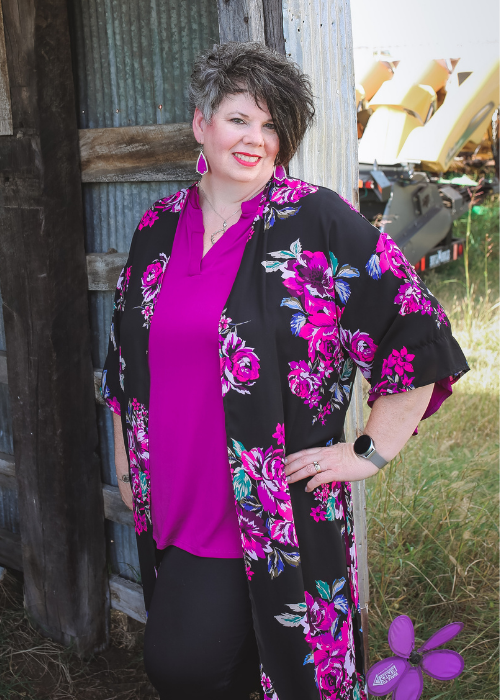
Rayna Neises, ACC
Author of No Regrets: Hope for Your Caregiving Season, Editor of Content Magazine, ICF Certified Coach, Speaker, Podcast Host, & Positive Approach to Care® Independent Trainer offering encouragement, support, and resources to those who are in a Season of Caring for Aging Parents.
Her passion is for those caring and their parents, so that both might be seen, not forgotten & cared for, not neglected.
Would you like to be a Guest? | Email Rayna
New Episodes Every Other Thursday @ 9am
To help the show:
- Leave an honest review on iTunes or where ever you listen. Your ratings and reviews really help, and I read each one.
- Subscribe at your favorite podcast platform or subscribe below and never miss an episode.

0 Comments